Ever wondered how a CMMS (Computerized Maintenance Management System) can truly revolutionize operations in the energy and utilities sector? Let’s dive into the pivotal role analytics play in optimizing efficiency and performance.

Analytics in a CMMS for energy and utilities serve as the backbone for informed decision-making. By crunching vast amounts of data, these systems uncover patterns and trends that might otherwise remain hidden. Imagine having the power to predict equipment failures before they occur or optimizing maintenance schedules based on real-time data insights. That’s the promise of analytics.

One of the key benefits is predictive maintenance. By leveraging historical data and predictive algorithms, a CMMS can forecast when equipment is likely to fail. This proactive approach minimizes downtime, reduces costly repairs, and ensures smooth operations. It’s like having a crystal ball that helps you preempt problems before they escalate.

Moreover, analytics empower energy and utilities companies to optimize asset performance. Through detailed performance analysis, organizations can identify underperforming assets, assess their lifecycle costs, and make data-driven decisions on repairs, replacements, or upgrades. It’s akin to fine-tuning a race car to achieve peak performance on the track.

Another game-changing aspect is energy management. Analytics within a CMMS enable precise monitoring of energy consumption patterns across facilities. By identifying energy inefficiencies and opportunities for optimization, companies can implement targeted strategies to reduce costs and environmental impact.

In essence, analytics in a CMMS for energy and utilities isn’t just about crunching numbers; it’s about harnessing data to drive operational excellence and sustainability. It’s the difference between navigating in the dark versus having a GPS guiding you towards efficiency, cost savings, and reliability.

Harnessing Data: Analytics Revolutionizing CMMS Efficiency in Energy and Utilities

In today’s rapidly evolving landscape, where every watt and drop of resource matters, CMMS powered by analytics emerges as a game-changer. Imagine it as a finely tuned orchestra where each instrument plays in perfect harmony, optimizing maintenance schedules, predicting equipment failures before they occur, and ultimately, extending asset lifespan.

At its core, this analytics-driven approach sifts through vast amounts of data, from sensor readings to historical performance metrics, to extract actionable insights. It’s like having a crystal ball that foresees potential breakdowns and suggests preventive measures proactively. This proactive maintenance strategy not only minimizes downtime but also prevents costly emergency repairs, saving both time and money.

Moreover, analytics enable energy and utility companies to streamline their workflows. By analyzing historical data patterns, CMMS can optimize resource allocation and scheduling, ensuring that maintenance tasks are executed precisely when needed without disrupting operations unnecessarily. It’s akin to navigating through traffic using real-time updates to choose the fastest route—a constant adjustment based on incoming data.

Furthermore, the insights gleaned from analytics empower decision-makers. They can make informed choices about equipment upgrades, replacements, or operational adjustments backed by data-driven evidence. It’s about moving from reactive firefighting to proactive resource management—an evolution that promises not just efficiency gains but also sustainability benefits.

The integration of analytics into CMMS represents a pivotal shift in how energy and utility sectors operate. It’s a transformational journey where data isn’t just a byproduct but the cornerstone of smarter, more efficient management practices. As this revolution unfolds, companies embracing analytics are poised to lead, harnessing the power of data to drive operational excellence and sustainable growth.

Unveiling Insights: How Analytics Optimizes Maintenance in Energy CMMS

Analytics has revolutionized maintenance management in Energy CMMS (Computerized Maintenance Management Systems), offering profound insights that streamline operations and enhance efficiency. Imagine analytics as the compass guiding maintenance teams through the intricate landscape of equipment upkeep. By harnessing data, organizations can predict equipment failures before they occur, minimizing downtime and maximizing productivity.

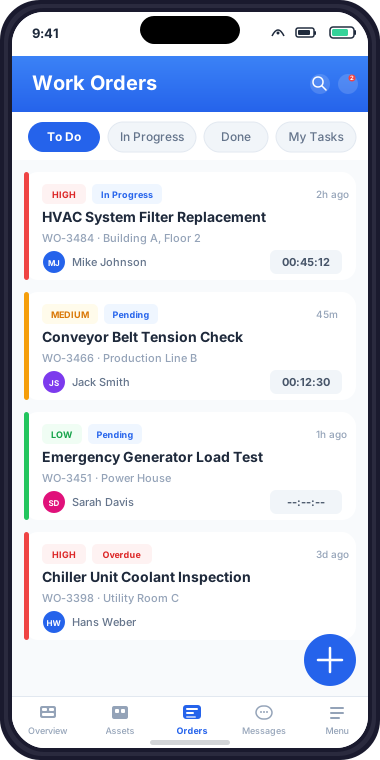
One of the pivotal benefits of analytics in Energy CMMS is its predictive capability. Through historical data analysis, patterns and trends emerge, allowing maintenance teams to forecast potential issues with equipment. This proactive approach transforms maintenance from reactive firefighting to strategic, planned interventions. For instance, by analyzing data on equipment performance, such as energy consumption patterns or wear and tear metrics, organizations can schedule maintenance tasks precisely when needed, optimizing resources and reducing costs.

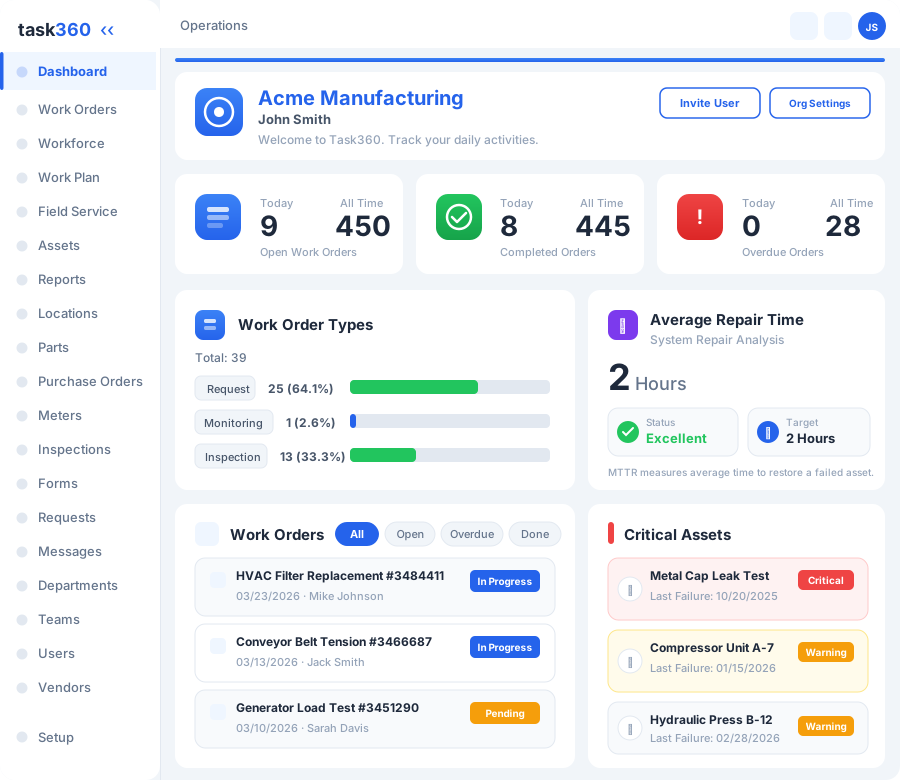
Moreover, analytics empowers decision-making by providing actionable insights. By visualizing data trends through intuitive dashboards and reports, stakeholders gain a comprehensive understanding of asset health and performance metrics. This visibility enables informed decisions on equipment upgrades, replacements, or adjustments to maintenance schedules. For example, analytics might reveal that certain equipment components are nearing their lifecycle end, prompting preemptive replacement before failure disrupts operations.

Furthermore, analytics in Energy CMMS fosters continuous improvement. By tracking key performance indicators (KPIs) over time, organizations can benchmark maintenance efficiency and set goals for improvement. This iterative process ensures that maintenance strategies evolve alongside technological advancements and operational changes, maintaining competitiveness in the energy sector.

Analytics is the cornerstone of modern maintenance management in Energy CMMS, offering transformative benefits from predictive maintenance to enhanced decision-making and continuous improvement. By leveraging data-driven insights, organizations can navigate challenges effectively, ensuring optimal performance and reliability of critical assets.

Powering Up: Analytics as the Backbone of Efficient Utility Management

What is the role of analytics in a CMMS for energy and utilities?

Picture this: just like a skilled detective unravels clues to solve a case, analytics sifts through massive streams of data to uncover patterns, trends, and anomalies. It’s like having a magnifying glass that not only magnifies but also analyzes every minute detail, revealing hidden efficiencies and opportunities for improvement.

In the realm of utility management, every drop of data counts. From electricity consumption patterns to water usage fluctuations, analytics digs deep into the numbers, offering a clear view of where resources are being optimally utilized and where there’s room for adjustment. It’s akin to having a GPS for efficiency, guiding decision-makers towards the most effective routes to conserving resources and reducing costs.

Moreover, analytics doesn’t just stop at observation; it empowers proactive decision-making. By forecasting future demand based on historical data and current trends, organizations can preemptively allocate resources, ensuring uninterrupted service delivery and maximizing operational uptime. It’s like predicting the weather – but for utility consumption patterns – allowing for strategic planning and resource allocation.

In essence, analytics isn’t just about crunching numbers; it’s about transforming data into actionable insights that drive efficiency, sustainability, and cost-effectiveness. It’s the behind-the-scenes hero that enables utilities to operate smarter, greener, and more effectively. So, the next time you flip a switch or turn on a tap, remember: analytics is quietly working behind the scenes to ensure that power and resources are managed with precision and purpose.

From Data to Action: The Transformative Impact of Analytics in Energy CMMS

Analytics in Energy CMMS integrates data from various sources—sensors, equipment logs, historical performance data—to uncover patterns and anomalies that human analysis alone might miss. By harnessing advanced algorithms and machine learning models, CMMS platforms can predict equipment failures before they occur, thereby preventing costly downtime and optimizing maintenance schedules proactively.

Imagine a scenario where a wind farm’s turbines are constantly monitored through real-time data feeds. Analytics algorithms detect a slight deviation in vibration patterns, signaling a potential mechanical issue. Without delay, maintenance teams are alerted, and preemptive repairs are scheduled. This proactive approach not only saves on repair costs but also maximizes the uptime of critical assets, ensuring optimal energy production.

Furthermore, analytics in CMMS empowers energy managers with comprehensive insights into asset performance trends over time. By visualizing data through intuitive dashboards and reports, decision-makers can identify areas for improvement, optimize resource allocation, and streamline operational workflows. For instance, by analyzing historical energy consumption patterns, facilities can adjust their usage during peak hours to minimize expenses without compromising operational output.

In essence, the transformative impact of analytics in Energy CMMS extends beyond mere data analysis. It represents a paradigm shift towards a more proactive, efficient, and sustainable approach to energy management. By leveraging the power of data to drive actionable decisions, organizations can achieve greater operational resilience, cost savings, and environmental sustainability in the dynamic landscape of energy production and maintenance.

Smart Strategies: Integrating Analytics for Enhanced Utility Maintenance

Have you ever wondered how utilities manage to keep everything running smoothly? Behind the scenes, modern technology and smart strategies play a crucial role. One of the key tools in their arsenal is analytics. By integrating analytics into utility maintenance, providers can streamline operations, improve efficiency, and ensure everything functions at its best.

Analytics in utility maintenance isn’t just about crunching numbers. It’s about using data to predict and prevent issues before they arise. Imagine a city’s water supply system. By analyzing usage patterns and flow data in real-time, utilities can detect leaks early on. This proactive approach not only saves water but also prevents costly repairs and disruptions to service.

Moreover, analytics helps utilities optimize resource allocation. Whether it’s electricity, gas, or water, knowing where and when resources are needed most allows providers to allocate them effectively. It’s like navigating traffic with real-time updates — you take the fastest route to avoid congestion. Similarly, utilities use analytics to ensure resources are distributed efficiently, maximizing service reliability and minimizing waste.

Another significant benefit of integrating analytics is improved asset management. Utilities operate vast networks of infrastructure, from power lines to pipelines. These assets require regular maintenance to function reliably. Analytics allows providers to monitor the health of these assets continuously. It’s akin to regularly servicing your car based on its performance data — preventive maintenance keeps everything running smoothly and extends the lifespan of critical infrastructure.

Integrating analytics into utility maintenance isn’t just a trend; it’s a smart strategy that yields tangible benefits. By leveraging data insights, utilities can enhance operational efficiency, improve service reliability, and optimize resource management. As technology continues to advance, analytics will play an increasingly pivotal role in shaping the future of utility management.

This article aims to inform readers about the importance and benefits of integrating analytics in utility maintenance while maintaining a conversational and engaging tone.

Predictive Precision: How Analytics Predicts Equipment Performance in Energy CMMS

Ever wondered how some energy companies seem to have a crystal ball when it comes to maintaining their equipment? It’s not magic—it’s the power of predictive analytics integrated into their Computerized Maintenance Management Systems (CMMS). This cutting-edge technology is revolutionizing the way energy facilities manage their equipment, ensuring smooth operations and minimizing downtime.

In essence, predictive analytics uses historical data, real-time information, and advanced algorithms to forecast equipment performance. Imagine it like a weather forecast, but for machines. By analyzing patterns and trends from past data, CMMS equipped with predictive analytics can predict when equipment might fail or require maintenance before it actually does. This proactive approach saves companies not only time but also significant costs associated with unplanned downtime and emergency repairs.

Take a wind turbine farm, for example. Each turbine operates under varying conditions like wind speed, temperature, and usage patterns. Predictive analytics can crunch through vast amounts of data collected from sensors and operational logs to predict when a turbine might need maintenance. This foresight allows maintenance teams to schedule repairs during off-peak times or when weather conditions are favorable, maximizing operational efficiency.

What is the role of analytics in a CMMS for energy and utilities?

Moreover, predictive analytics doesn’t just stop at predicting failures. It can also optimize equipment performance. By identifying inefficiencies or suboptimal settings, CMMS can recommend adjustments to improve overall equipment effectiveness (OEE). This proactive optimization ensures that every piece of equipment operates at its peak performance, translating to better energy output and reduced energy waste.

In the realm of energy CMMS, where every minute of downtime can result in substantial financial losses and potential energy shortages, predictive analytics offers a game-changing advantage. It’s not just about reacting to problems as they arise; it’s about foreseeing them and taking preemptive action to keep operations running smoothly.

Frequently Asked Questions

How can analytics in CMMS enhance asset performance in the energy sector

Learn how analytics integrated into Computerized Maintenance Management Systems (CMMS) can significantly boost asset performance in the energy sector. Discover how data-driven insights help optimize maintenance schedules, predict equipment failures, and improve operational efficiency.

How does predictive maintenance through CMMS analytics benefit energy infrastructure

Learn how predictive maintenance using CMMS analytics enhances energy infrastructure by minimizing downtime, optimizing equipment performance, and reducing overall maintenance costs.

What are the key features to look for in CMMS analytics for energy and utilities

Learn about the essential features of CMMS analytics for energy and utilities. Discover how to optimize maintenance schedules, monitor asset performance, and reduce downtime efficiently.

What types of data does CMMS analytics capture in utility management

Discover the types of data CMMS analytics capture in utility management. Learn how CMMS systems track and analyze operational metrics such as energy consumption, equipment performance, maintenance schedules, and cost trends. Gain insights into optimizing resource allocation and enhancing operational efficiency through comprehensive data analysis.

What are CMMS analytics and why are they important for energy and utilities

CMMS analytics are tools that analyze data from Computerized Maintenance Management Systems (CMMS) to improve efficiency and reduce costs in energy and utilities operations. They are crucial for identifying trends, predicting equipment failures, optimizing maintenance schedules, and maximizing energy usage efficiency.