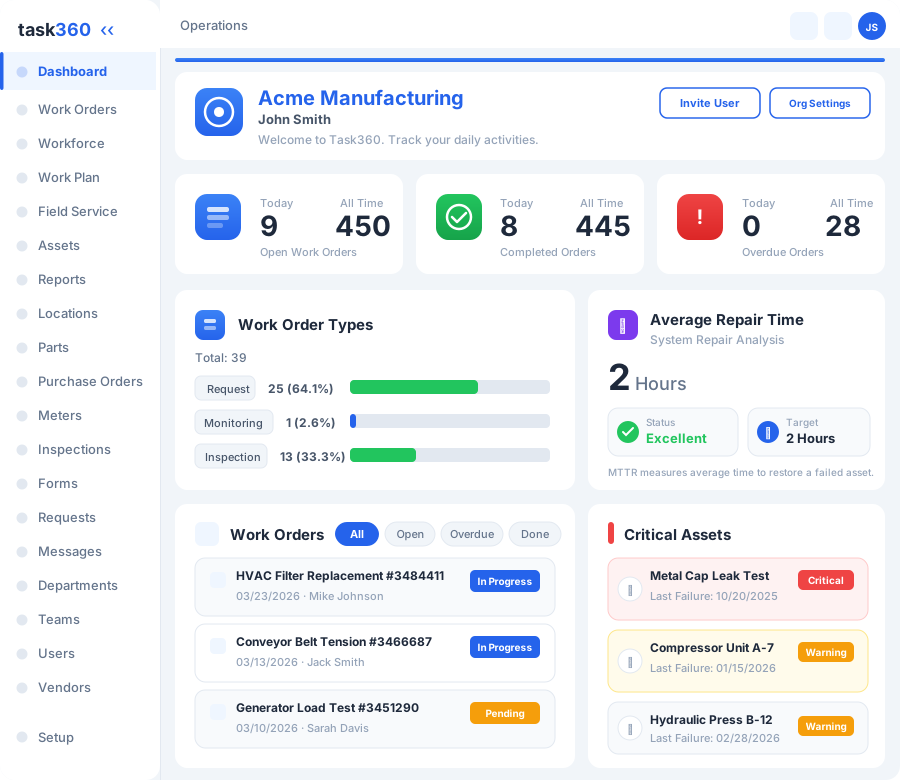
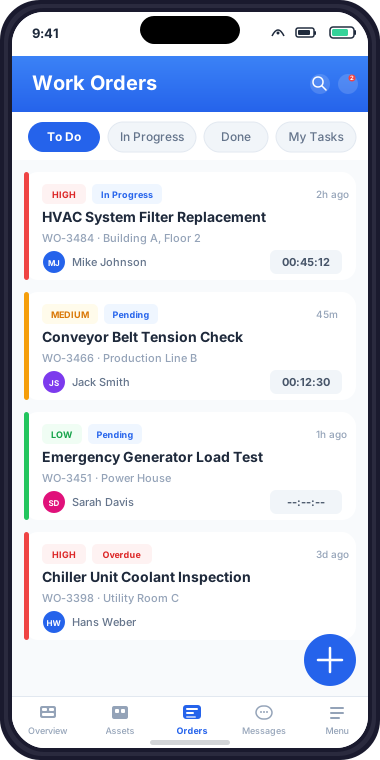
In the dynamic world of pharmaceutical manufacturing, efficiency and compliance are paramount. A Computerized Maintenance Management System (CMMS) plays a crucial role in optimizing operations, particularly when it comes to tracking maintenance expenses.
Imagine your pharmaceutical facility as a complex orchestra where each instrument must perform flawlessly to create a harmonious symphony of production. Just like a conductor oversees every note, a CMMS acts as your maestro, orchestrating maintenance activities with precision.
Firstly, a CMMS provides a centralized platform to manage all maintenance-related data. It allows maintenance managers to track expenses in real-time, from routine equipment checks to unexpected repairs. By capturing this data digitally, pharmaceutical companies gain invaluable insights into their spending patterns. This visibility enables proactive decision-making, ensuring that budgets are allocated efficiently and operations remain cost-effective.
Moreover, the predictive maintenance capabilities of a CMMS are akin to having a crystal ball that foresees potential equipment failures. By analyzing historical data and performance metrics, the system can predict when machinery might require maintenance before it malfunctions. This proactive approach not only minimizes downtime but also prevents costly emergency repairs, thus reducing overall maintenance expenses.
Furthermore, compliance is a cornerstone of pharmaceutical manufacturing. A robust CMMS helps ensure adherence to regulatory standards by maintaining comprehensive maintenance records. These records serve as a digital audit trail, detailing every maintenance activity and associated expenses. During inspections, pharmaceutical companies can demonstrate their commitment to quality and safety with accurate, up-to-date records at their fingertips.
A CMMS is more than just a tool for tracking maintenance expenses in pharmaceuticals; it’s a strategic asset that enhances operational efficiency, promotes regulatory compliance, and safeguards profitability. By leveraging its capabilities, pharmaceutical manufacturers can navigate the complexities of maintenance management with confidence, ensuring continuous production of life-saving medications.
Cutting Costs and Boosting Efficiency: The Role of CMMS in Pharmaceutical Maintenance Expense Tracking
Imagine a pharmaceutical facility as a complex orchestra, where every instrument must harmonize perfectly to produce the desired symphony of medicines and treatments. Just like in an orchestra, where each note must be precise and timed impeccably, pharmaceutical maintenance requires meticulous planning and execution to ensure smooth operations.
CMMS acts as the conductor in this orchestra, ensuring that every maintenance activity is scheduled, tracked, and optimized for efficiency. It serves as a digital brain, storing crucial data about equipment maintenance schedules, historical performance, and predictive analytics. By centralizing all this information, CMMS empowers pharmaceutical companies to make informed decisions that minimize downtime, reduce costs, and maximize the lifespan of critical equipment.
In the competitive landscape of pharmaceuticals, where every minute and every dollar counts, CMMS plays a pivotal role in cutting costs. By proactively monitoring equipment health and performance, pharmaceutical companies can avoid unexpected breakdowns that lead to costly repairs and production delays. Instead of reacting to problems as they arise, CMMS allows for preventive maintenance, identifying potential issues before they escalate into significant problems.
Moreover, CMMS enhances efficiency by streamlining workflows and eliminating redundant processes. It ensures that maintenance tasks are prioritized based on urgency and criticality, optimizing resource allocation and manpower utilization. This not only saves time but also boosts overall productivity, allowing pharmaceutical manufacturers to focus more on innovation and less on operational disruptions.
Financial Insights: Leveraging CMMS for Transparent Maintenance Cost Management in Pharma
CMMS platforms streamline the maintenance workflow by digitizing maintenance schedules, tracking work orders, and managing inventory. However, their true power lies in their ability to provide transparent financial insights. By integrating with financial systems, CMMS can capture data on maintenance costs in real-time. This integration enables pharmaceutical companies to monitor expenses meticulously, identifying trends, and making informed decisions to optimize spending.
Imagine CMMS as the financial watchdog of a pharmaceutical facility, tirelessly tracking every maintenance activity and its associated costs. It breaks down expenses into categories, such as labor, parts, and contractor fees, offering granular insights into where the money is going. These insights empower financial managers to allocate resources more efficiently, ensuring that every dollar spent contributes directly to operational efficiency and product quality.
Moreover, CMMS doesn’t just report on past expenditures; it forecasts future maintenance costs based on historical data and predictive analytics. This proactive approach allows pharmaceutical companies to budget more accurately, minimizing surprises and unplanned expenses.
In essence, leveraging CMMS for transparent maintenance cost management in pharma isn’t just about compliance or efficiency—it’s about financial stewardship. It transforms data into actionable insights, guiding strategic decisions that enhance profitability and sustainability. By harnessing the power of CMMS, pharmaceutical companies can achieve greater financial clarity and operational excellence, setting the stage for continued growth and innovation in the competitive landscape.
Smart Spending: Using CMMS Data to Optimize Maintenance Budgets in Pharmaceutical Manufacturing
Imagine CMMS data as a treasure map, revealing hidden paths to cost savings and operational excellence. By analyzing this data, pharmaceutical manufacturers can pinpoint trends in equipment breakdowns, predict maintenance needs before they arise, and ultimately reduce downtime. This proactive approach not only saves money but also enhances productivity by keeping production lines running smoothly.
Moreover, CMMS data provides invaluable insights into the lifecycle of pharmaceutical equipment. From the moment a machine is installed to its eventual retirement, every maintenance action is logged and analyzed. This historical data allows managers to make informed decisions about repair versus replacement, ensuring that budget allocations are strategic and justified.
In essence, utilizing CMMS data is like having a crystal ball for maintenance budgeting. It empowers pharmaceutical manufacturers to allocate funds where they matter most, whether it’s preventive maintenance to prevent costly breakdowns or upgrades to enhance efficiency. By harnessing the power of data analytics, facilities can achieve the delicate balance of cost-effectiveness and operational reliability that is crucial in the pharmaceutical industry.
Integrating CMMS data into budget optimization strategies isn’t just a trend; it’s a necessity for staying competitive in a challenging market. By leveraging this data effectively, pharmaceutical manufacturers can navigate the complexities of maintenance management with confidence, ensuring that every dollar spent contributes to the overall success of the operation.
Beyond Compliance: How CMMS Solutions Are Redefining Expense Tracking in Pharma Maintenance
CMMS, or Computerized Maintenance Management Systems, go beyond mere compliance. They revolutionize how pharmaceutical companies monitor and manage maintenance expenses. Imagine having a system that not only tracks every maintenance activity but also predicts future maintenance needs based on real-time data. It’s like having a proactive assistant that keeps your facility running smoothly without unexpected downtime.
These systems are designed to be intuitive, user-friendly tools that empower maintenance teams. They streamline the process of tracking expenses by digitizing maintenance records, automating scheduling, and optimizing resource allocation. By doing so, CMMS solutions ensure that every penny spent on maintenance is accounted for and justified.
In the pharmaceutical industry, where precision and efficiency are non-negotiable, CMMS solutions act as catalysts for operational excellence. They enable maintenance managers to make data-driven decisions, allocate resources effectively, and maintain compliance effortlessly. This proactive approach not only reduces downtime but also minimizes costs associated with reactive maintenance.
Think of CMMS as the conductor of an orchestra, harmonizing various maintenance tasks into a cohesive symphony. It orchestrates everything from routine inspections to equipment repairs, all while keeping a keen eye on budget constraints and regulatory requirements.
As technology continues to evolve, so too does the role of CMMS in pharmaceutical maintenance. It’s no longer just a tool; it’s a strategic asset that drives productivity, efficiency, and cost-effectiveness. With CMMS solutions, pharmaceutical companies can navigate the complexities of maintenance management with confidence, knowing that every dollar spent is contributing to the overall success of their operations.
Tracking Every Penny: CMMS Tools Transforming Expense Management in Pharmaceutical Facilities
Imagine having a tool that not only tracks every expense but also predicts maintenance needs before they become costly problems. That’s exactly what CMMS tools do. They act as a digital assistant, keeping a vigilant eye on equipment performance and maintenance schedules. By centralizing data on a single platform, these tools streamline workflows, minimize downtime, and reduce the risk of regulatory non-compliance.
In pharmaceuticals, precision is paramount. CMMS tools offer a level of accuracy that manual methods simply can’t match. They provide real-time updates on equipment status and maintenance activities, ensuring that every penny spent contributes to operational efficiency and product quality.
But it’s not just about the numbers. CMMS tools empower facility managers and technicians by giving them actionable insights into asset performance. They enable proactive decision-making, helping teams prioritize tasks based on criticality and impact. This proactive approach not only extends the lifespan of expensive equipment but also enhances overall facility productivity.
Think of CMMS tools as the Sherlock Holmes of expense management in pharmaceutical facilities, uncovering hidden inefficiencies and optimizing resource allocation. They transform complex data into clear, actionable steps, guiding facilities towards cost-effective solutions and sustainable practices.
CMMS tools aren’t just an investment in technology; they’re a strategic asset in the quest for operational excellence. By tracking every penny and transforming expense management, these tools uphold the highest standards of quality, compliance, and efficiency in pharmaceutical facilities.
From Data to Dollars: Harnessing CMMS Analytics for Maintenance Expense Control in Pharmaceuticals
Imagine CMMS analytics as a keen-eyed detective, meticulously combing through maintenance records, equipment downtime logs, and resource allocation data. It identifies patterns, anomalies, and potential areas for improvement. By deciphering these data points, pharmaceutical firms gain a clearer picture of where their maintenance dollars are going and where savings opportunities lie hidden.
One of the key benefits of CMMS analytics is its ability to forecast maintenance needs with precision. By analyzing historical data on equipment performance and failure rates, pharmaceutical companies can proactively schedule maintenance, reducing unplanned downtime and its associated costs. This proactive approach not only keeps operations running smoothly but also prevents costly emergency repairs.
Moreover, CMMS analytics aids in optimizing spare parts inventory. By tracking usage patterns and failure frequencies, it ensures that critical spare parts are always available without overstocking, thus freeing up capital that can be reinvested elsewhere in the business.
In the competitive landscape of pharmaceuticals, every dollar saved through efficient maintenance practices can be reinvested into research, development, or enhancing operational capabilities. CMMS analytics acts as a financial steward, guiding companies towards smarter spending and greater profitability.
Frequently Asked Questions
Why is tracking maintenance expenses crucial for pharmaceutical manufacturing with a CMMS
Tracking maintenance expenses with a CMMS (Computerized Maintenance Management System) is crucial for pharmaceutical manufacturing to ensure operational efficiency, regulatory compliance, and cost control. It helps optimize asset performance, schedule preventive maintenance, and manage budgets effectively.
How can a CMMS help in controlling maintenance costs in the pharmaceutical industry
Learn how a CMMS (Computerized Maintenance Management System) optimizes maintenance activities in the pharmaceutical industry, reducing downtime, prolonging equipment lifespan, and ensuring regulatory compliance, ultimately lowering operational costs.
How does a CMMS generate reports to analyze maintenance spending in pharmaceutical facilities
Learn how CMMS systems generate reports to analyze maintenance spending in pharmaceutical facilities. Understand the process of data collection, integration, and analysis within the CMMS platform, enabling efficient cost tracking and resource allocation.
What are the key features of a CMMS for tracking maintenance expenses in pharmaceuticals
Discover the essential features of a CMMS tailored for tracking maintenance expenses in the pharmaceutical industry. Learn how these systems streamline cost monitoring, ensure regulatory compliance, and enhance operational efficiency.
What are the benefits of integrating financial data with CMMS for maintenance cost tracking in pharmaceuticals
Discover the advantages of merging financial data with CMMS to streamline maintenance cost monitoring within the pharmaceutical industry.