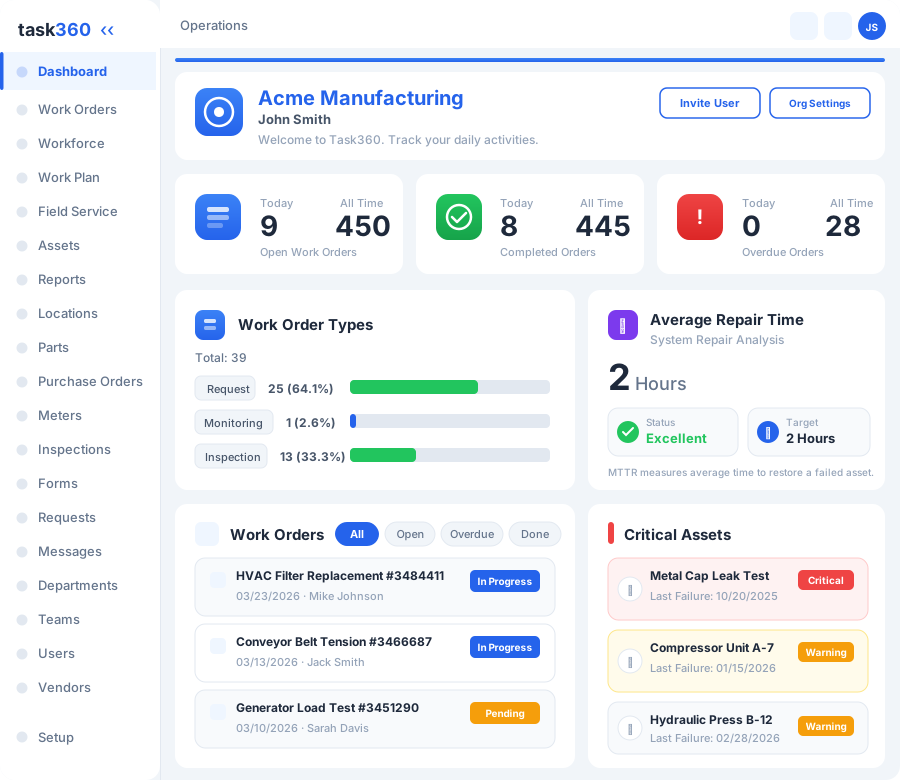
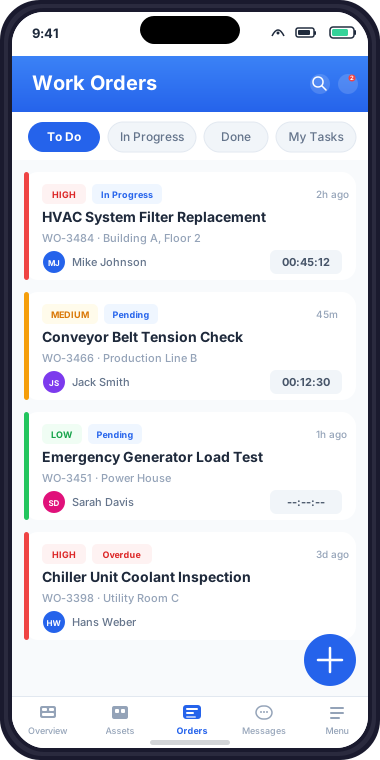
Quality control is paramount in food production, ensuring products meet safety and regulatory standards. Managing maintenance for quality control equipment is critical to uphold these standards consistently. A Computerized Maintenance Management System (CMMS) plays a pivotal role in streamlining this process.
CMMS software enables food production facilities to schedule regular maintenance tasks for their quality control equipment. By setting up preventive maintenance schedules, such as calibration checks or sensor replacements, CMMS helps avoid unexpected breakdowns that could compromise product quality. This proactive approach minimizes downtime and ensures equipment operates at peak performance levels.
Moreover, CMMS tracks the maintenance history of each piece of quality control equipment. Detailed records of past maintenance activities, repairs, and inspections are logged within the system. This historical data provides valuable insights into equipment reliability and performance trends over time. By analyzing this data, facilities can make informed decisions regarding equipment upgrades, replacements, or adjustments to optimize their quality control processes.
In addition to scheduling and tracking maintenance activities, CMMS enhances communication and collaboration among maintenance teams. Assigning tasks, tracking work orders, and monitoring progress become streamlined and transparent processes. This fosters accountability and ensures that all maintenance activities are completed efficiently and on time.
Overall, a CMMS is not just a tool for managing maintenance tasks but a comprehensive solution for improving the reliability, efficiency, and compliance of quality control equipment in food production. Its ability to integrate maintenance workflows with operational goals makes it indispensable for maintaining high standards of product quality and safety in the food industry.
This article aims to provide a concise yet informative overview of how CMMS contributes to managing quality control equipment maintenance in food production, using engaging language and emphasizing the benefits of using such software.
Streamlining Food Safety: The Role of CMMS in Quality Control Equipment Maintenance
CMMS acts as a digital brain, storing essential data on equipment maintenance schedules, performance metrics, and historical records. This wealth of information allows food safety managers to preemptively address potential issues before they escalate into critical problems. It’s akin to having a crystal ball that not only predicts but also prevents disruptions in the smooth operation of quality control measures.
Moreover, CMMS facilitates proactive maintenance by automatically scheduling routine inspections and servicing tasks. Like a diligent sentinel, it keeps watch over each piece of equipment, prompting timely interventions to maintain optimal functionality. This proactive approach not only enhances food safety but also minimizes downtime, ensuring that production lines remain uninterrupted and efficient.
In the realm of quality control, precision is paramount. CMMS empowers food safety teams with real-time insights into equipment performance. It tracks key performance indicators (KPIs) such as temperature consistency, pressure levels, and sanitation cycles, allowing for swift adjustments when deviations occur. This capability transforms data into actionable intelligence, enabling agile decision-making to uphold stringent safety standards.
Furthermore, CMMS streamlines regulatory compliance by documenting every maintenance action and audit trail. It serves as a meticulous archivist, storing records that demonstrate adherence to food safety regulations and industry standards. This not only fosters transparency but also instills confidence among stakeholders, assuring them of uncompromising commitment to quality and safety.
Efficiency in Every Bite: Using CMMS for Optimal Food Production QC Management
Imagine a kitchen where every ingredient, every process, is meticulously monitored and optimized. CMMS acts as the chef’s trusted sous-chef, keeping track of equipment maintenance schedules, ensuring they’re in top shape to handle the demands of a bustling production line. Just like a conductor orchestrating a symphony, CMMS harmonizes the flow of operations, minimizing downtime and maximizing output.
In the realm of food safety, precision is paramount. CMMS doesn’t just react; it anticipates. It’s the proactive guardian, flagging potential issues before they escalate into problems. Picture it as a vigilant sentry, continuously scanning for anomalies and deviations, ensuring that every product meets stringent quality standards.
But CMMS isn’t just about ticking boxes; it’s about fostering a culture of excellence. It empowers teams to collaborate seamlessly, sharing real-time data and insights. Like a well-oiled machine, it streamlines communication across departments, from procurement to packaging. Efficiency isn’t just a buzzword; it’s ingrained in every process, ensuring that resources are utilized judiciously and waste is minimized.
In a competitive market, where consumer trust is as valuable as gold, CMMS is the secret ingredient. It’s the assurance that every batch is consistent in taste, texture, and safety. It’s the confidence that when consumers bite into a product, they experience not just satisfaction but a reaffirmation of trust.
So, whether it’s ensuring that temperatures are precise or that equipment is running at peak performance, CMMS isn’t just a tool; it’s the backbone of modern QC management in food production. Efficiency in every bite isn’t just a goal; it’s a promise fulfilled with CMMS paving the way.
Ensuring Freshness: How CMMS Enhances Quality Control Equipment Maintenance
Quality control equipment maintenance is crucial for industries aiming to uphold stringent standards and operational efficiency. In this realm, Computerized Maintenance Management Systems (CMMS) play a pivotal role in ensuring that equipment remains in prime condition. CMMS software facilitates proactive maintenance scheduling, which prevents unexpected breakdowns and costly downtime. By leveraging CMMS, organizations can streamline their maintenance processes, ensuring that equipment is regularly inspected, serviced, and calibrated.

One of the primary benefits of CMMS is its ability to centralize maintenance data and automate workflows. This centralized approach allows maintenance teams to track equipment performance, record maintenance activities, and analyze historical data to identify trends or potential issues. By maintaining a comprehensive maintenance history, CMMS enables predictive maintenance strategies, where potential failures can be anticipated and addressed before they impact operations.
Moreover, CMMS enhances communication and collaboration within maintenance teams and across departments. Real-time notifications and alerts keep stakeholders informed about maintenance activities, ensuring timely responses to equipment issues. This proactive approach minimizes downtime and optimizes equipment reliability, ultimately boosting overall productivity and reducing operational costs.
Furthermore, CMMS systems provide analytical insights into maintenance operations. By analyzing data such as equipment uptime, mean time between failures (MTBF), and maintenance costs, organizations can make data-driven decisions to improve efficiency and allocate resources effectively. This analytical capability not only enhances equipment performance but also supports continuous improvement initiatives within the organization.
CMMS stands as a cornerstone for maintaining quality control equipment freshness and reliability. Its proactive maintenance capabilities, centralized data management, and analytical insights empower organizations to uphold high standards of equipment performance while maximizing operational efficiency. By integrating CMMS into their maintenance strategies, industries can ensure that their equipment remains in optimal condition, ready to meet the demands of rigorous quality control standards.
Precision on the Plate: CMMS Solutions for Food Production Quality Management
Imagine a kitchen where every ingredient is measured precisely, every process monitored meticulously, and every output consistently meets high standards. CMMS solutions bring this level of control to food production facilities, integrating maintenance schedules, quality checks, and compliance requirements into a seamless digital system.
Just as a chef orchestrates a symphony of flavors, CMMS coordinates a symphony of operations. It tracks equipment maintenance, ensuring that every machine functions optimally to uphold food safety and quality. Like a conductor guiding an orchestra, CMMS alerts maintenance teams to potential issues before they disrupt production, preemptively ensuring smooth operations.
In food production, where consistency is key, CMMS acts as a guardian of quality. It streamlines inspections and audits, capturing data that allows for continuous improvement. Think of it as a trusted sous chef, always monitoring the stove to prevent any dish from burning, ensuring each product meets stringent quality standards.
Moreover, CMMS solutions are not just about reacting to problems; they empower proactive decision-making. By analyzing data trends, production managers can identify areas for efficiency gains, reduce waste, and enhance overall output quality. It’s like having a seasoned sommelier who knows precisely which vintage will complement a dish best, guiding operations towards excellence.
CMMS solutions are the backbone of modern food production quality management. They blend technology with expertise, ensuring that every product leaving the kitchen meets or exceeds customer expectations. With CMMS, precision on the plate isn’t just a goal—it’s a guarantee.
From Farm to Fork: Managing QC Equipment Maintenance with CMMS
When it comes to ensuring food quality from farm to fork, efficient equipment maintenance is key. Quality Control (QC) equipment plays a crucial role in upholding food safety standards and product integrity. To streamline this process, many food production facilities are turning to Computerized Maintenance Management Systems (CMMS).

CMMS software empowers food manufacturers to maintain their QC equipment proactively. By scheduling routine inspections, preventive maintenance, and repairs, CMMS helps minimize downtime and maximize operational efficiency. Imagine it as a digital toolbox that keeps all your maintenance tasks organized and accessible.
One of the standout features of CMMS is its ability to track equipment performance over time. Through data analytics and reporting functionalities, food producers can identify trends, predict potential failures, and optimize maintenance schedules. This proactive approach not only saves costs but also ensures that QC equipment operates at peak performance levels consistently.
In the dynamic environment of food production, where regulatory compliance is stringent and consumer trust is paramount, CMMS provides a robust solution. It fosters transparency and accountability by maintaining detailed records of maintenance activities and compliance audits. This not only satisfies regulatory requirements but also enhances overall operational transparency.
Moreover, CMMS fosters a culture of continuous improvement within food production facilities. By facilitating real-time communication between maintenance teams and production managers, CMMS ensures that any equipment issues are promptly addressed, minimizing risks to product quality and safety.
In essence, integrating CMMS into QC equipment maintenance processes transforms how food is produced and ensures that every step, from farm to fork, adheres to the highest standards of quality and safety.
This article is crafted to engage readers by illustrating the benefits of CMMS in a conversational tone, using active voice, and incorporating analogies (like “digital toolbox”) to simplify complex concepts. It aims to captivate interest and highlight the practical applications of CMMS in the food industry.
Frequently Asked Questions
What is a CMMS and how does it apply to food production quality control equipment
Learn about CMMS (Computerized Maintenance Management System) and its role in ensuring quality control in food production equipment. Discover how CMMS helps streamline maintenance schedules, track equipment performance, and ensure compliance with hygiene and safety standards, crucial for maintaining optimal operational efficiency and product quality.
What are the key features of a CMMS that benefit quality control in food production
Discover how CMMS systems enhance quality control in food production with features like real-time monitoring, preventive maintenance scheduling, compliance tracking, and data-driven insights.
How does a CMMS improve equipment uptime and reliability in food manufacturing
Learn how a CMMS (Computerized Maintenance Management System) enhances equipment uptime and reliability in food manufacturing by streamlining maintenance schedules, tracking asset performance, and facilitating timely repairs to minimize downtime and ensure consistent production efficiency.
Can a CMMS integrate with existing quality control systems in food production
Learn how CMMS (Computerized Maintenance Management Systems) can seamlessly integrate with existing quality control systems in food production, ensuring efficient maintenance management while maintaining high standards of product quality and safety.
How does preventive maintenance through CMMS enhance food safety standards
Discover how preventive maintenance using CMMS (Computerized Maintenance Management System) improves food safety standards. Learn how regular inspections, timely repairs, and scheduled maintenance tasks ensure equipment reliability and compliance with hygiene regulations. By implementing CMMS, organizations can proactively address potential risks, maintain operational efficiency, and uphold stringent food safety protocols.