In the realm of agriculture, every decision counts. From planting schedules to irrigation management and equipment maintenance, the stakes are high. A CMMS equipped with advanced analytics becomes the farmer’s ally, offering clarity amidst the complexities of modern farming.
One of the key benefits of analytics in a CMMS is predictive maintenance. Instead of waiting for equipment to fail, analytics can predict when maintenance is needed based on usage patterns and historical data. This proactive approach minimizes downtime and prevents costly repairs, keeping operations running smoothly.

Furthermore, analytics empower farmers to make informed decisions about resource allocation. By analyzing data on crop yields, weather patterns, and soil conditions, farmers can optimize planting strategies and maximize harvests. This not only increases profitability but also promotes sustainable agricultural practices.
Imagine analytics as a compass guiding farmers through unpredictable terrain. Like a skilled navigator, analytics highlight trends and patterns that might otherwise go unnoticed. For example, by analyzing data on equipment performance, farmers can identify inefficiencies and fine-tune operational processes for better outcomes.
In essence, analytics in a CMMS for agriculture are more than just numbers on a screen; they are actionable insights that drive success. They enable farmers to harness the power of data to improve decision-making, increase efficiency, and ultimately cultivate a more prosperous future for agricultural endeavors.
Harnessing Crop Insights: Analytics’ Vital Role in Agricultural CMMS
Analytics in Agricultural CMMS isn’t merely about numbers; it’s about decoding the language of crops. Farmers can now delve deep into data to understand soil health, predict optimal planting times, and even foresee potential pest outbreaks. It’s like having a crystal ball that predicts crop yields and guides decisions.
But how does it work? Imagine each crop as a unique story, with data points as chapters. Analytics stitches these chapters together, revealing trends and patterns that were once invisible. For instance, historical weather data combined with soil moisture readings can forecast irrigation needs with precision, ensuring water is used efficiently.
Moreover, analytics empower farmers to make proactive decisions rather than reactive ones. By detecting anomalies early, such as nutrient deficiencies or early signs of disease, farmers can intervene swiftly, potentially saving entire harvests.
In essence, Agricultural CMMS with robust analytics isn’t just a tool; it’s a partner in growth. It transforms farms into smart ecosystems where every action is backed by insights. Whether it’s optimizing fertilizer usage based on crop behavior or fine-tuning planting schedules to align with weather forecasts, analytics paves the way for sustainable agriculture.
The journey doesn’t stop here. As technology advances, so too will our ability to harness crop insights. With each season, analytics will refine its predictive prowess, empowering farmers to navigate uncertainties and maximize yields sustainably. After all, in the realm of agriculture, knowledge isn’t just power—it’s the harvest of tomorrow.
Data-Driven Farming: How Analytics Revolutionizes CMMS in Agriculture
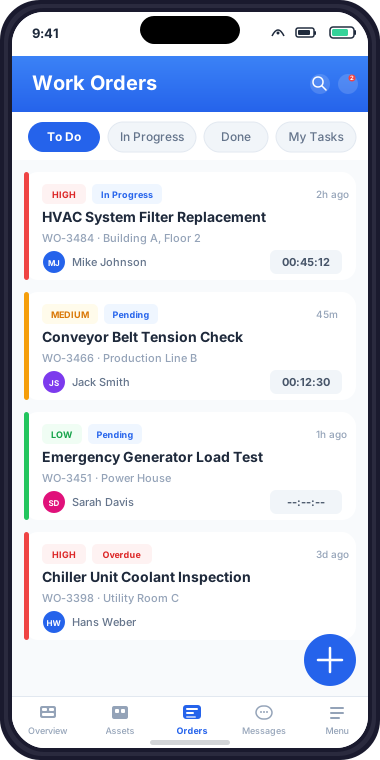
In today’s agricultural landscape, CMMS plays a crucial role in streamlining operations. By integrating data analytics, farmers can now proactively monitor equipment performance, predict potential breakdowns, and schedule maintenance tasks efficiently. This proactive approach minimizes downtime, reduces operational costs, and extends the lifespan of agricultural machinery.
One of the key benefits of data-driven CMMS is its ability to provide real-time insights into farm operations. Farmers can remotely monitor equipment performance and receive alerts for any anomalies, allowing them to take immediate action. This level of visibility enhances decision-making, enabling farmers to allocate resources effectively and optimize production processes.
Moreover, analytics in CMMS allows for predictive maintenance. By analyzing historical data and machine learning algorithms, farmers can anticipate maintenance needs based on usage patterns and environmental conditions. This proactive maintenance strategy prevents unexpected failures, ensuring continuous operation during critical periods like planting and harvesting seasons.
Another significant advantage is the ability to optimize resource utilization. Data-driven insights help farmers optimize irrigation schedules, fertilizer applications, and crop rotation plans based on soil health and weather forecasts. This precision agriculture approach not only maximizes yield but also promotes environmental sustainability by reducing water and chemical usage.
In essence, data-driven farming through advanced CMMS analytics is revolutionizing agriculture by empowering farmers with actionable insights. By harnessing the power of data, farmers can improve operational efficiency, reduce costs, and make informed decisions that drive sustainable agricultural practices. As technology continues to evolve, the future of farming lies in integrating advanced analytics into everyday operations, ensuring a more productive and resilient agricultural sector.
From Fields to Figures: Analyzing the Impact of CMMS Analytics on Farm Efficiency
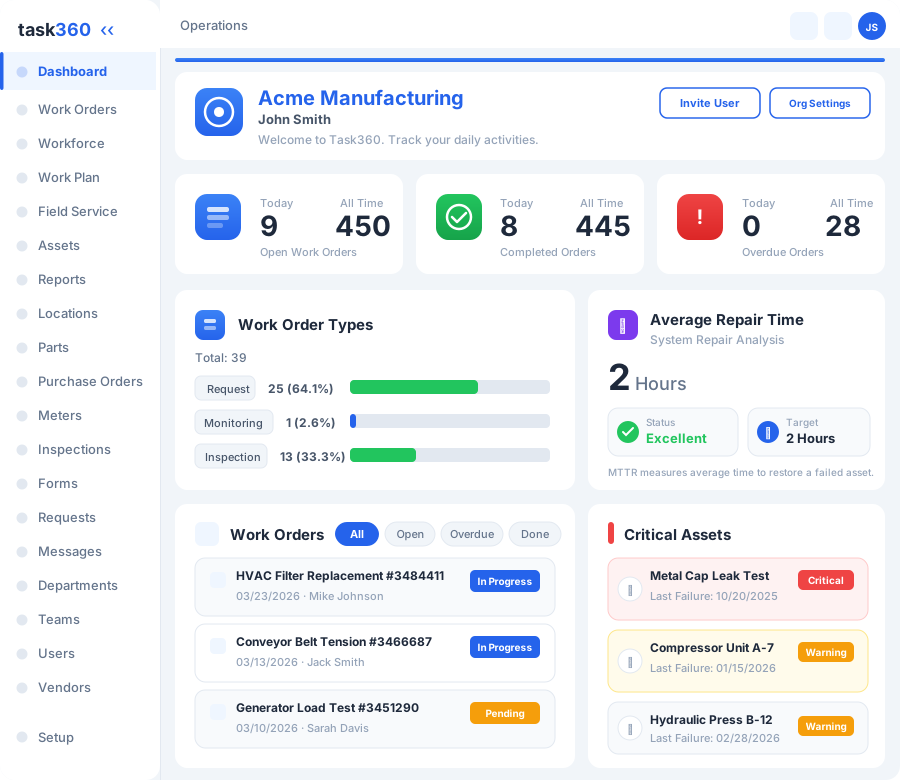
CMMS analytics provide farmers with invaluable insights into equipment performance, maintenance schedules, and operational efficiencies. Imagine having a digital dashboard that not only tracks the health of your machinery but also predicts potential breakdowns before they occur. This proactive approach not only saves precious time but also minimizes downtime, allowing farmers to optimize their resources effectively.
At its core, CMMS analytics collect vast amounts of data from various farm equipment, such as tractors, harvesters, and irrigation systems. This data is then analyzed to identify patterns and trends that can streamline operations. For instance, through historical data analysis, farmers can pinpoint the most productive times for planting or harvesting based on weather conditions and equipment performance metrics.
Moreover, these analytics play a crucial role in cost management by optimizing inventory levels and reducing unnecessary expenditures on maintenance. By scheduling maintenance tasks efficiently, farmers can extend the lifespan of their equipment and avoid costly repairs down the line. This proactive maintenance approach ensures that machinery operates at peak performance levels throughout the farming season.
In essence, the impact of CMMS analytics on farm efficiency is profound. It empowers farmers with actionable insights that foster better decision-making and resource allocation. By harnessing the power of data analytics, farmers can navigate the complexities of modern agriculture with confidence, knowing that they have a tool that not only enhances productivity but also ensures sustainability for future generations.
As technology continues to advance, the integration of CMMS analytics into farming practices will undoubtedly pave the way for smarter, more efficient agricultural operations. It’s not just about cultivating fields anymore; it’s about cultivating data to cultivate success in farming.
Predictive Power: How CMMS Analytics Forecasts Agricultural Trends
Imagine having a crystal ball for agriculture, predicting trends and optimizing operations before they even unfold. That’s the power of CMMS (Computerized Maintenance Management System) analytics in the agricultural sector. CMMS goes beyond mere maintenance; it harnesses data to foresee trends and shifts in the farming landscape.
At its core, CMMS gathers data from equipment sensors, maintenance logs, and historical trends. Like a seasoned farmer reading the sky for signs of rain, CMMS sifts through this data to identify patterns and anomalies. It tracks everything from machinery performance to crop yields, creating a comprehensive picture of farm operations.
But how does CMMS turn data into foresight? It’s all about predictive analytics. By crunching numbers and analyzing historical data, CMMS can forecast maintenance needs, optimize machinery uptime, and even predict crop yields based on environmental conditions. It’s like having a weather forecast tailored for agriculture, guiding farmers on when to plant, irrigate, and harvest.
Take, for instance, a vineyard using CMMS. Instead of relying on guesswork, CMMS analytics can predict when a grape harvester might need maintenance based on usage patterns and historical breakdowns. This proactive approach minimizes downtime during crucial harvest seasons, maximizing productivity and quality.
Moreover, CMMS doesn’t just stop at machinery; it extends to supply chain management and resource allocation. By predicting demand spikes or supply chain disruptions, CMMS helps farmers adjust planting schedules or storage capacities in advance, ensuring they meet market demands efficiently.
In essence, CMMS analytics is the farmer’s ally in a data-driven world. It’s not about seeing the future with mystical clarity but harnessing the power of data to make informed decisions. Just as a seasoned farmer reads the signs of nature, CMMS reads the signs of data—guiding agricultural practices towards efficiency, sustainability, and profitability.
Optimizing Harvests: The Strategic Use of Analytics in Agricultural CMMS
Imagine this: every step of the crop lifecycle, from planting to harvesting, can now be meticulously tracked and analyzed using sophisticated software. These systems gather data on soil health, weather patterns, crop growth stages, and equipment performance. They crunch numbers faster than you can say “bountiful harvest,” providing farmers with actionable insights in real-time.
Analytics in agricultural CMMS go beyond mere data collection. They delve deep into the trends and patterns that influence crop productivity. For instance, they can predict optimal planting times based on historical weather data or recommend precise fertilizer amounts tailored to soil nutrient levels. It’s like having a crystal ball that helps farmers make decisions that directly impact their yield and profitability.
But it’s not just about the science; it’s about the art of farming too. Analytics empower farmers to make informed decisions while retaining the intuition and experience that come from years on the land. It’s a blend of tradition and technology, where the age-old wisdom of farming meets cutting-edge data analytics.
Moreover, these systems are not just for large agribusinesses. Small and medium-sized farms can also benefit immensely from agricultural CMMS. By optimizing resource allocation and minimizing waste, they can level the playing field and compete more effectively in today’s market.

The strategic use of analytics in agricultural CMMS isn’t just a trend; it’s a game-changer. It transforms farming from a guessing game into a precise science, where every seed planted and every crop harvested is backed by data-driven insights. So, whether you’re a seasoned farmer or just getting your hands dirty, embracing analytics could be the key to reaping bigger, better harvests year after year.
Frequently Asked Questions
How does CMMS analytics enhance crop yield and farm efficiency?
Learn how CMMS analytics boosts crop yield and farm efficiency by providing real-time insights into equipment performance, maintenance needs, and resource allocation. Analyzing data helps optimize operations, reduce downtime, and improve decision-making for better agricultural productivity.
What are the key analytics used in CMMS for agriculture?
Learn about the essential analytics employed in CMMS (Computerized Maintenance Management Systems) specifically tailored for agriculture. Discover how these analytics optimize farm operations and enhance productivity.
How does analytics in CMMS optimize farm equipment maintenance?
Learn how analytics integrated into Computerized Maintenance Management Systems (CMMS) streamline farm equipment maintenance by analyzing data trends, predicting failures, and optimizing maintenance schedules, ensuring efficient operations and minimized downtime.
Why is predictive analytics important in agricultural CMMS?
Predictive analytics plays a crucial role in agricultural CMMS by leveraging data to anticipate maintenance needs and optimize operations. It helps in identifying potential equipment failures before they occur, reducing downtime and costs. This proactive approach enhances overall efficiency and productivity, ensuring that agricultural machinery operates at peak performance.
What benefits do farmers gain from using analytics in CMMS?
Learn how farmers benefit significantly from using analytics within their CMMS (Computerized Maintenance Management Systems). Analytics help optimize equipment maintenance schedules, reduce downtime, improve resource allocation, and enhance overall operational efficiency on farms.